
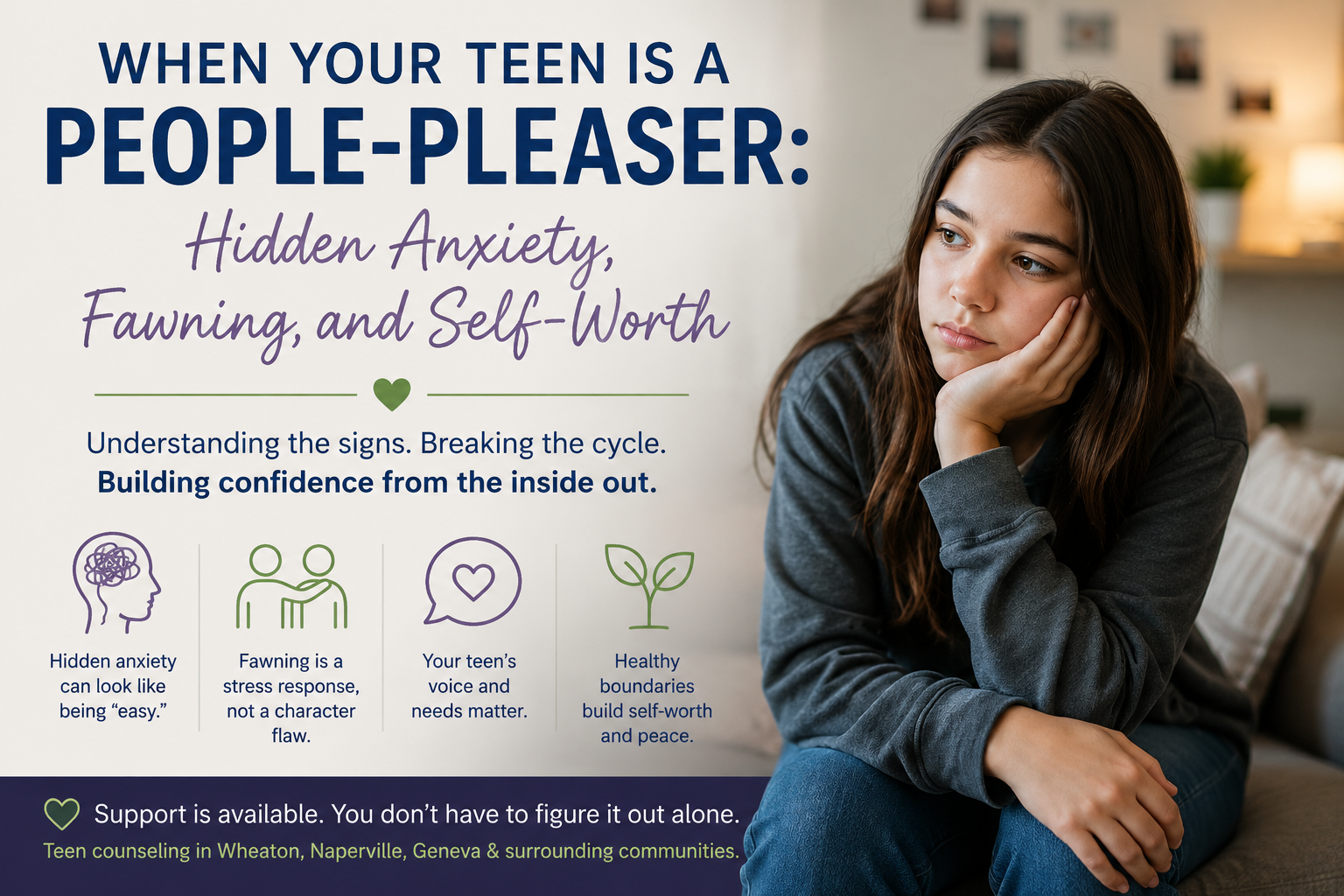
Some teens rebel loudly. Others cope by becoming “easy.”
They say yes when they want to say no. They apologize when nothing is their fault. They hide opinions, keep the peace, and work hard to make sure nobody is disappointed.
At first, people-pleasing can look like maturity. Your teen may seem responsible, polite, helpful, and low-maintenance. But underneath, they may be carrying anxiety, fear of rejection, low self-worth, or a stress response often called fawning.
For families in Wheaton, Naperville, Geneva, and nearby DuPage County communities, teen counseling can help teens understand what is happening beneath the surface and learn healthier ways to speak up.
What People-Pleasing Can Look Like
People-pleasing is more than being kind. Kindness is freely chosen. People-pleasing often comes from fear.
A teen who struggles with people-pleasing may check everyone’s mood, avoid honest feelings, say “I’m fine” when they are not, or agree to plans they do not want. They may overexplain, over-apologize, or feel guilty for having needs.
Some teens become the helper, fixer, peacekeeper, or “good kid” because it feels safer than risking conflict. They may do well in school and behave at home, yet feel exhausted inside.
How Anxiety Hides Behind Being Agreeable
Many anxious teens do not look anxious. They look busy, quiet, high-achieving, compliant, or overly careful.
Instead of saying, “I’m worried people won’t like me,” they may say, “It’s no big deal.” Instead of admitting they feel overwhelmed, they may take on more responsibility.
This can intensify during adolescence, when friendships, grades, social media, faith, dating, family expectations, and future plans all feel more important.
What Is Fawning?
Fawning is a stress response where a person tries to stay safe by pleasing others. While fight, flight, and freeze are more familiar, fawning can appear when keeping others happy feels safest.
In teens, fawning may look like laughing off hurtful comments, agreeing to avoid being left out, staying silent during conflict, or taking blame to end tension. It is not manipulation. It is often a learned survival strategy.
Why Self-Worth Matters
A teen who people-pleases may quietly believe, “My needs are too much,” “My opinion does not matter,” or “People like me because of what I do for them.”
Over time, this can affect friendships, dating, school pressure, family communication, and mental health. Healthy self-worth helps teens understand that they can be kind without disappearing, care about others without being controlled, and say no while still being loved.
How Parents Can Help at Home
Start by noticing the pattern without labeling your teen as weak or dramatic. You might say, “I notice you often agree quickly even when you seem unsure. I want you to know your honest opinion is safe here.”
Give your teen time to answer. Praise honesty, not just cooperation. Avoid only rewarding the “easy” behavior. Ask what they want before assuming. Model calm boundaries in your own relationships.
Most importantly, create room for respectful disagreement. Teens need to learn that conflict does not have to end connection.
When Teen Counseling May Help
Counseling may help when your teen seems anxious, withdrawn, overly responsible, afraid to speak up, emotionally exhausted, or stuck in unhealthy friendships. It may also help if people-pleasing affects sleep, school, mood, family communication, or confidence.
At Stenzel Clinical Services, teen counseling can give adolescents a supportive space to understand anxiety, build self-worth, practice boundaries, and develop healthier communication. For families in Wheaton, Naperville, Geneva, Glen Ellyn, Winfield, Carol Stream, and surrounding areas, support is available in person and through online counseling options.
Your teen does not have to become louder or less caring to become healthier. They may simply need help learning that their voice, needs, and feelings matter too.
Frequently Asked Questions
What are signs my teen is a people-pleaser?
Signs may include frequent apologizing, avoiding conflict, agreeing too quickly, hiding disappointment, overexplaining, or feeling responsible for other people’s emotions. Some teens also become perfectionistic, overly helpful, or afraid to ask for what they need because they worry about upsetting others.
Is people-pleasing always connected to anxiety?
Not always, but anxiety is often part of the pattern. Some teens people-please because they fear rejection, criticism, conflict, or abandonment. Others learned that being agreeable keeps life calmer. Counseling can help identify what is driving the behavior and how to respond.
What is fawning in teen relationships?
Fawning is a stress response where a teen tries to stay emotionally safe by pleasing others. It may look like laughing off hurt, taking blame, staying quiet, or agreeing with friends to avoid rejection. It is often a coping strategy, not a character flaw.
How can parents help without pressuring their teen?
Parents can help by listening calmly, asking open questions, allowing disagreement, and praising honesty instead of only cooperation. Try not to rush their answers or dismiss their discomfort. A teen who feels emotionally safe at home can practice having a stronger voice.
When should we consider teen counseling in Wheaton?
Consider counseling if people-pleasing affects your teen’s mood, sleep, friendships, school stress, self-confidence, or family communication. Teen counseling in Wheaton can help your child understand anxiety, build boundaries, and develop a healthier sense of self in a supportive counseling setting.
“People-pleasing can look like maturity, but underneath it may be anxiety, fear of rejection, or a teen quietly wondering if their needs matter too.
Stenzel Clinical Services
Recent Posts

Why Your Child Falls Apart After School
The teacher says your child had a great day. They followed directions, finished their work and got along with [...]

The Architecture of Habit: Rewiring the Brain for Lasting Change
Understanding the neuroscience of behavioral design to dismantle unwanted patterns and build scalable, positive routines. Every individual operates on [...]

Making Room for Change: How to Build Habits That Last
Making meaningful behavioral or life changes is inherently difficult. Humans are creatures of habit who naturally resist change because [...]